
Living Labs
Living Labs – Energy Efficiency Solutions for Sustainable Cities
The 4A4PEDs Living Labs are real urban environments across Europe where new energy efficiency solutions are developed, tested, and improved through applied research. A Living Lab is an open innovation ecosystem that combines data, design, and collaboration to address real-world challenges in energy consumption, affordability, and sustainability.
Building European Positive Energy Cities Together
Funded by the European Union, 4A4PEDs brings together universities, industry experts, and public sector stakeholders, including Frankfurt University of Applied Sciences and other European partners. Together, we aim to reduce greenhouse gas emissions, improve energy infrastructure, and develop practical tools that help achieve the Sustainable Development Goals (SDGs).
Verona, Italy
Helsinki, Finland
Almstelveen, Netherlands
Battenberg-Hatzfeld (Eder), Germany

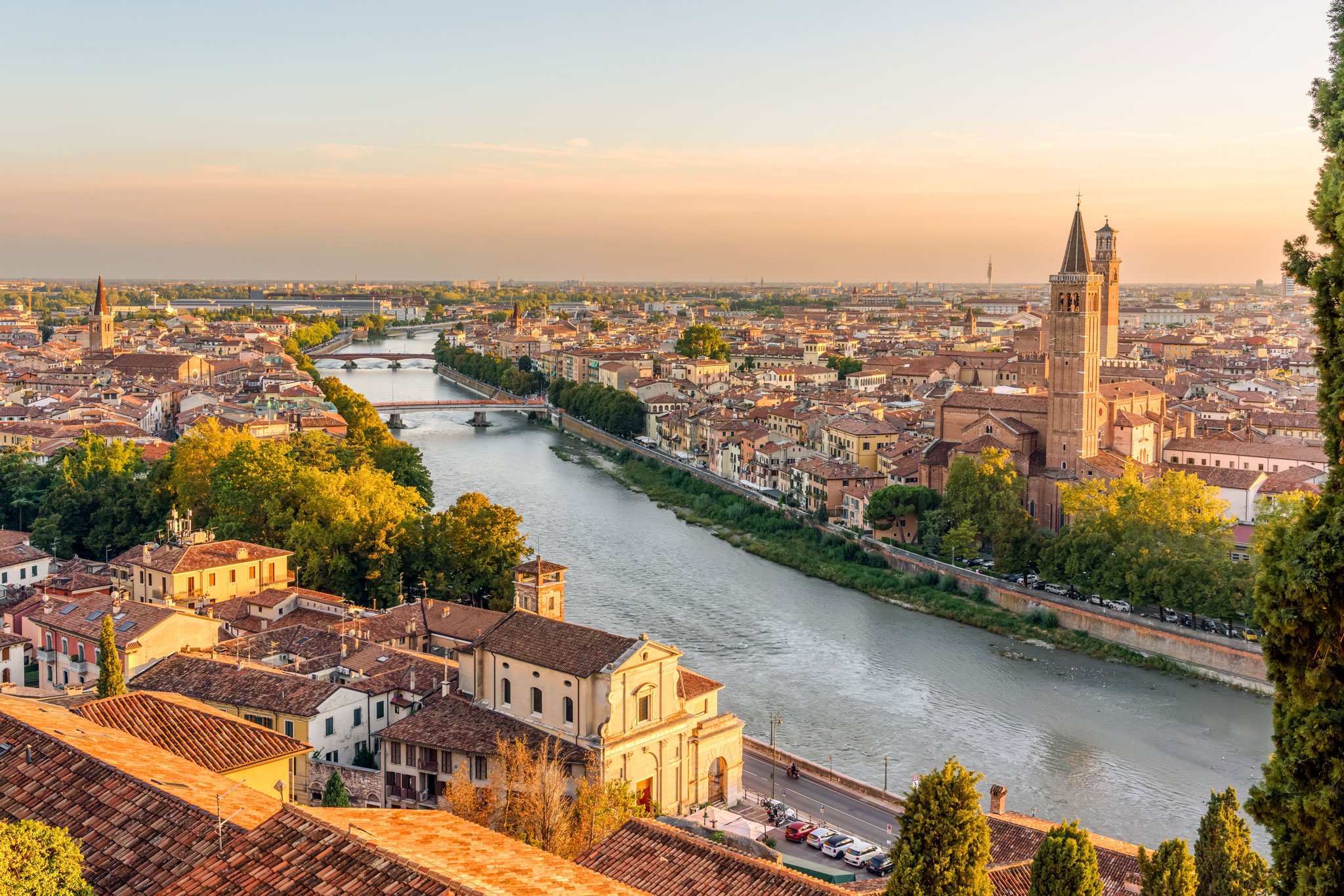
Verona, Italy
Context
Verona, a North-Eastern Italian city with about 265,000 residents, represents a combination of urban and rural areas with high energy needs and limited renewable energy production.
Through local sustainability programs such as PAESC and PSTE, Verona aims for climate neutrality by 2030. The city has also launched its first Renewable Energy Community and collaborates with other cities to share solutions.

Objectives
- Develop and test innovative solutions for Positive Energy Districts (PEDs)
- To act as a living lab by actively participating in the testing and replication of the developed solutions.
Urban Regeneration & Energy Transition
- Recover and reuse waste heat from data centers in district energy systems.
- Improve energy access for vulnerable groups through public services and an Energy Community.
- Boost municipal capacity to support energy transition, focusing on public-private partnerships.
Impact Framework
- Availability: Focus on recovering and using waste heat from data centers integrated into District Energy Systems.
- Accessibility: Improve public services for marginalized voice through public services and an Energy Community.
- Affordability: Enhancing the municipality’s ability to promote and invest in energy transition projects.
- Alliance: Engage local stakeholders in planning the Positive Energy Districts.
Helsinki, Finland
Context
Helsinki, with 675,750 residents and over 1.3 million in the metro area, aims to be carbon neutral by 2030.
The city has already reduced emissions by nearly one-third since 1990. It promotes sustainable growth through innovation, energy cooperation, and green business models.

Objectives
- Application of expertise in energy infrastructure systems and strategic development
- Exploration of the feasibility and interoperability planning of energy systems in a PED (Positive Energy District)
Impact Framework
- Availability: Real-time energy optimization ensures a stable and sustainable supply for all buildings.
- Accessibility:Inclusive energy planning guarantees equal access to smart energy services across the district.
- Affordability: Cost-effective solutions target energy poverty and reduce household energy bills.
- Alliance: Co-creation with residents fosters trust and long-term commitment to energy transition goals.
Almstelveen, Netherlands
Context
Almstelveen, a city of 93,000 residents, targets a 95% reduction in CO₂ emissions compared to 1990.
It is a member of the European Craft Cities program under the New European Bauhaus initiative, promoting sustainable design and inclusive urban culture.

Objectives
- Testing ground within the Living Lab
- Development and replication of innovative solutions to actively participate in city-to-city
- Adoption of Positive Energy District (PED) solutions
Impact Framework
- Availability: Sustainable heat supply for buildings and neighborhoods.
- Accessibility: Fair distribution of energy benefits across the area.
- Affordability: Targeting energy poverty in vulnerable housing sectors.
- Alliance: Empowering residents through inclusive, community-driven planning.
Battenberg-Hatzfeld (Eder), Germany
Context Battenberg
Battenberg (Eder), a small town in Hesse, is part of the inter-municipal climate protection project in the Ederbergland region, which includes a total of 21,236 inhabitants.
The goal is to significantly reduce greenhouse gas emissions through a long-term strategy.
A key element is the development of an energy and CO₂ balance for all districts, from which concrete measures are derived and implemented together with neighboring municipalities.
Context Hatzfeld
Hatzfeld (Eder), a small town in Hesse, is part of the inter-municipal climate protection project in the Ederbergland region, which includes a total of 21,236 inhabitants.
With the help of federal and state funding, it plans to carry out an energy-efficient modernization of the community center.
This will save around 293,000 kWh per year—equivalent to 29,300 liters of heating oil—and reduce CO₂ emissions by 69 tons annually, cutting climate-damaging greenhouse gases by 90%.

Objectives
- Exchange of knowledge through city-to-city learning.
- Strengthening technical expertise in energy systems.
- Capacity building for the development and management of energy communities in rural areas.
Urban Regeneration & Energy Transition
- Battenberg and Hatzfeld collaborate through multi-level, place-based governance to revitalize semi-rural areas.
- Citizens, through the local energy cooperative, strengthen civic institutions with grassroots energy solutions.
- By ensuring access to affordable clean energy, the initiative promotes inclusive and fair regeneration.
Impact Framework
- Availability: Open spaces enable efficient solar energy deployment.
- Accessibility: Shared infrastructure ensures broad access to clean energy.
- Affordability: Financial tools and community models keep the transition cost-effective.
- Alliance: The local energy cooperative builds strong community partnerships for Positive Energy Districts.
